- local https://github.com/kubernetes-sigs/kind (or just use minikube if it works for you)
- cloud https://cloud.google.com/kubernetes-engine (for PersistentVolume and Ingress, I needed to try the real deal)
- practice environment: https://github.com/arush-sal/cka-practice-environment

Vikram Dutt vdt

This file contains hidden or bidirectional Unicode text that may be interpreted or compiled differently than what appears below. To review, open the file in an editor that reveals hidden Unicode characters.
Learn more about bidirectional Unicode characters
| <!DOCTYPE NETSCAPE-Bookmark-file-1> | |
| <!-- This is an automatically generated file. | |
| It will be read and overwritten. | |
| DO NOT EDIT! --> | |
| <META HTTP-EQUIV="Content-Type" CONTENT="text/html; charset=UTF-8"> | |
| <TITLE>Bookmarks</TITLE> | |
| <H1>Bookmarks</H1> | |
| <DL><p> | |
| <DT><H3 ADD_DATE="1579618265" LAST_MODIFIED="1582022136" PERSONAL_TOOLBAR_FOLDER="true">Bookmarks Bar</H3> | |
| <DL><p> |
vdt
/ CKAD.md
Created
September 22, 2021 11:05
— forked from veggiemonk/CKAD.md
CKAD exam preparation
vdt
/ tokenizations_post.md
Created
July 13, 2021 02:53
— forked from tamuhey/tokenizations_post.md
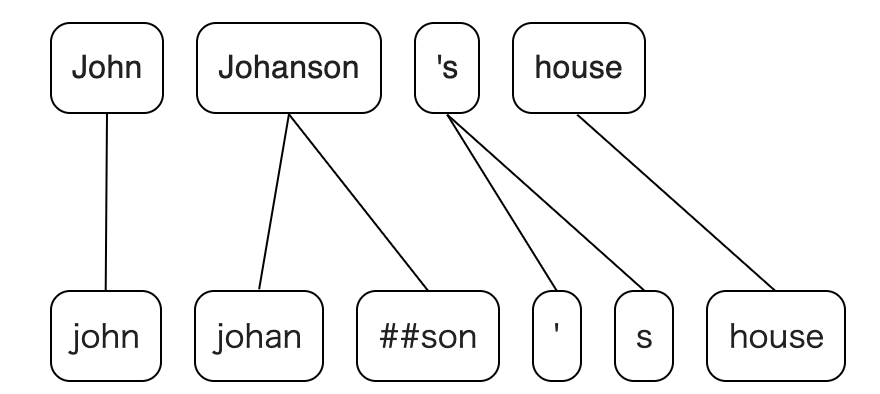
How to calculate the alignment between BERT and spaCy tokens effectively and robustly
site: https://tamuhey.github.io/tokenizations/
Natural Language Processing (NLP) has made great progress in recent years because of neural networks, which allows us to solve various tasks with end-to-end architecture. However, many NLP systems still require language-specific pre- and post-processing, especially in tokenizations. In this article, I describe an algorithm that simplifies calculating correspondence between tokens (e.g. BERT vs. spaCy), one such process. And I introduce Python and Rust libraries that implement this algorithm. Here is the library and the demo site links:
vdt
/ copilot-risk-assessment.md
Created
July 13, 2021 00:47
— forked from 0xabad1dea/copilot-risk-assessment.md
Risk Assessment of GitHub Copilot
this is a rough draft and may be updated with more examples
GitHub was kind enough to grant me swift access to the Copilot test phase despite me @'ing them several hundred times about ICE. I would like to examine it not in terms of productivity, but security. How risky is it to allow an AI to write some or all of your code?
Ultimately, a human being must take responsibility for every line of code that is committed. AI should not be used for "responsibility washing." However, Copilot is a tool, and workers need their tools to be reliable. A carpenter doesn't have to
vdt
/ retrieve-EC2-region-information-from-metadata.md
Created
December 10, 2020 21:53
— forked from quiver/retrieve-EC2-region-information-from-metadata.md
retrieve EC2's region from instance metadata
Sometimes you want to retrieve EC2 insntances' region information.
You can query that information through instance metadata(169.254.169.254).
$ curl --silent http://169.254.169.254/latest/dynamic/instance-identity/document
{
  "privateIp" : "172.31.2.15",
  "instanceId" : "i-12341ee8",
  "billingProducts" : null,
 "instanceType" : "t2.small",
vdt
/ retrieve-EC2-region-information-from-metadata.md
Created
December 10, 2020 21:53
— forked from quiver/retrieve-EC2-region-information-from-metadata.md
retrieve EC2's region from instance metadata
Sometimes you want to retrieve EC2 insntances' region information.
You can query that information through instance metadata(169.254.169.254).
$ curl --silent http://169.254.169.254/latest/dynamic/instance-identity/document
{
  "privateIp" : "172.31.2.15",
  "instanceId" : "i-12341ee8",
  "billingProducts" : null,
 "instanceType" : "t2.small",
vdt
/ retrieve-EC2-region-information-from-metadata.md
Created
December 10, 2020 21:53
— forked from quiver/retrieve-EC2-region-information-from-metadata.md
retrieve EC2's region from instance metadata
Sometimes you want to retrieve EC2 insntances' region information.
You can query that information through instance metadata(169.254.169.254).
$ curl --silent http://169.254.169.254/latest/dynamic/instance-identity/document
{
  "privateIp" : "172.31.2.15",
  "instanceId" : "i-12341ee8",
  "billingProducts" : null,
 "instanceType" : "t2.small",
vdt
/ flappy.html
Created
November 30, 2020 09:17
— forked from gullyn/flappy.html
Flappy bird in 228 bytes (improved!)
This file contains hidden or bidirectional Unicode text that may be interpreted or compiled differently than what appears below. To review, open the file in an editor that reveals hidden Unicode characters.
Learn more about bidirectional Unicode characters
| <body onload="z=c.getContext`2d`,p=Y=Q=',9|z.fillRect(',setInterval(`c.height=W=300,p?Y<W&&Y>P&Y<P+E|p>9?z.fillText(S++,0${Q}0,Y-=M-=.5,9${Q}p-=8,0${Q}p,P+E,9,W),P))):(p=M=S=0,Y=E=99):(p=W+4,P=S%E)`,24)"onclick=M=9><canvas id=c> |
vdt
/ when-will-web-browsers-be-complete.txt
Created
October 28, 2020 07:44
— forked from lf94/when-will-web-browsers-be-complete.txt
This file contains hidden or bidirectional Unicode text that may be interpreted or compiled differently than what appears below. To review, open the file in an editor that reveals hidden Unicode characters.
Learn more about bidirectional Unicode characters
| WHEN WILL BROWSERS BE COMPLETE? | |
| A short exploration into the end game of web browsers. | |
| This article may seem to be about bashing Google but it isn't. It's just about | |
| reflecting on the current state and how much longer we should see ourselves | |
| here. | |
| So what is the Web? Well we can agree the Web is a conglomerate of standards | |
| proposed by the W3C. So what do those standards define? |
vdt
/ Modelling a wealth tax.ipynb
Created
August 19, 2020 05:06
— forked from konsbn/Modelling a wealth tax.ipynb
Loading
Sorry, something went wrong. Reload?
Sorry, we cannot display this file.
Sorry, this file is invalid so it cannot be displayed.