-
This is a numbered list.
-
I'm going to include a fenced code block as part of this bullet:
Code
More Code

Brian Kidd wickkidd

clintel
/ gist:1155906
Created
August 19, 2011 02:40
Fenced code in bullet lists with GitHub-flavoured MarkDown??

ceejbot
/ stashwoes.md
Last active
March 14, 2019 02:57
A summary of things I miss about Github when I use Stash.
See this Cloudup stream for visual references.
The short answer is that I miss everything. There is no comparing the two projects. Stash's feature set is a shadow of Github's.
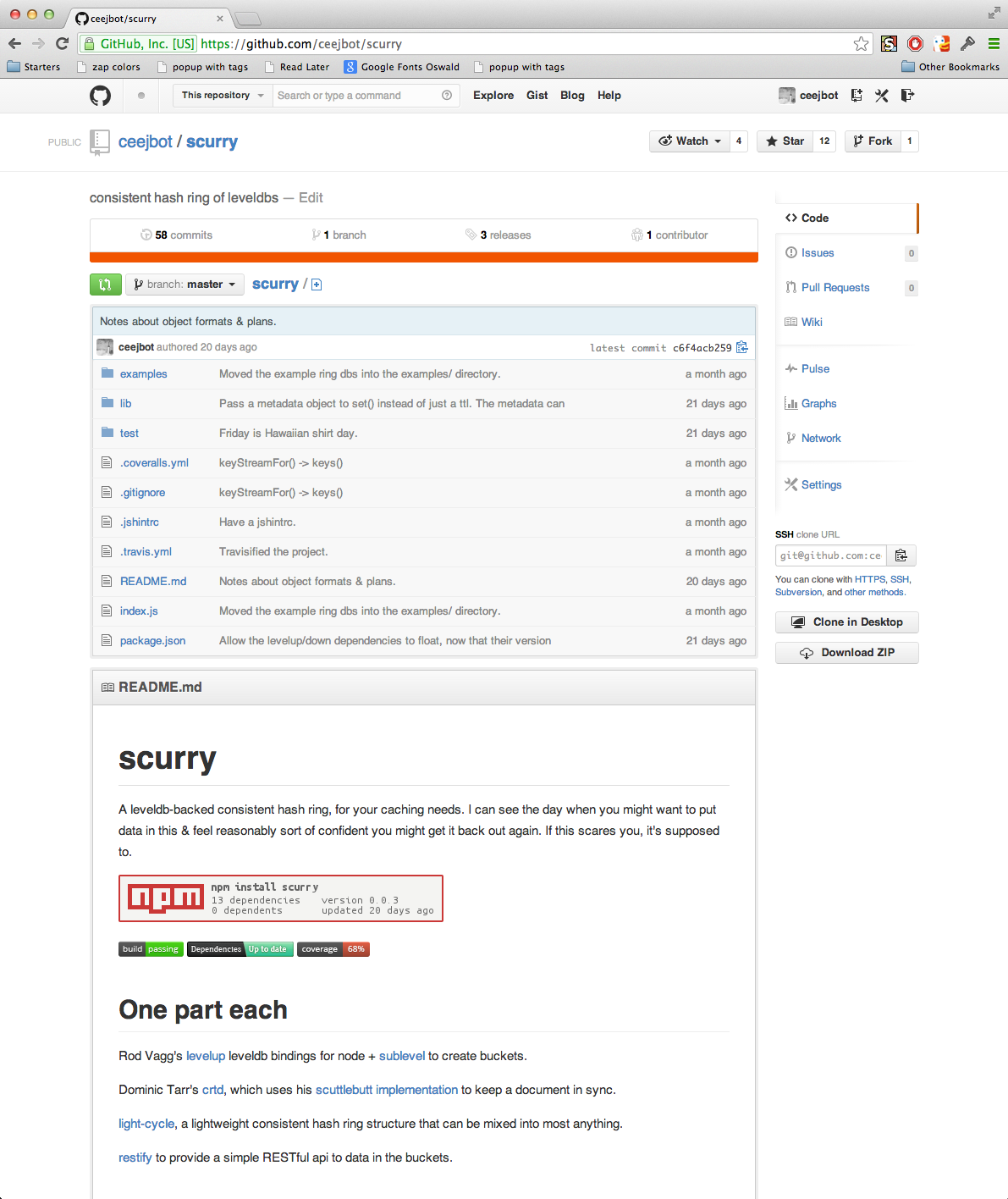
What a project looks like on Github:

rxaviers
/ gist:7360908
Last active
January 27, 2026 18:56
Complete list of github markdown emoji markup
People
 :bowtie: |
😄 :smile: |
😆 :laughing: |
|---|---|---|
😊 :blush: |
😃 :smiley: |
:relaxed: |
😏 :smirk: |
😍 :heart_eyes: |
😘 :kissing_heart: |
😚 :kissing_closed_eyes: |
😳 :flushed: |
😌 :relieved: |
😆 :satisfied: |
😁 :grin: |
😉 :wink: |
😜 :stuck_out_tongue_winking_eye: |
😝 :stuck_out_tongue_closed_eyes: |
😀 :grinning: |
😗 :kissing: |
😙 :kissing_smiling_eyes: |
😛 :stuck_out_tongue: |

adaugherity
/ patch-edid.rb
Last active
December 4, 2025 13:13
— forked from BugRoger/patch-edid.rb
This file contains hidden or bidirectional Unicode text that may be interpreted or compiled differently than what appears below. To review, open the file in an editor that reveals hidden Unicode characters.
Learn more about bidirectional Unicode characters
| #!/usr/bin/ruby | |
| # Create display override file to force Mac OS X to use RGB mode for Display | |
| # see http://embdev.net/topic/284710 | |
| require 'base64' | |
| data=`ioreg -l -d0 -w 0 -r -c AppleDisplay` | |
| edids=data.scan(/IODisplayEDID.*?<([a-z0-9]+)>/i).flatten | |
| vendorids=data.scan(/DisplayVendorID.*?([0-9]+)/i).flatten |

I've been asked a few times over the last few months to put together a full write-up of the Git workflow we use at RichRelevance (and at Precog before), since I have referenced it in passing quite a few times in tweets and in person. The workflow is appreciably different from GitFlow and its derivatives, and thus it brings with it a different set of tradeoffs and optimizations. To that end, it would probably be helpful to go over exactly what workflow benefits I find to be beneficial or even necessary.
- Two developers working on independent features must never be blocked by each other
- No code freeze! Ever! For any reason!
- A developer must be able to base derivative work on another developer's work, without waiting for any third party
- Two developers working on inter-dependent features (or even the same feature) must be able to do so without interference from (or interfering with) any other parties
- Developers must be able to work on multiple features simultaneously, or at lea

you bump the version of your package and publish to npm; the new version rolls out to users. However, you never make a tag, or forget to push it to github, so there's no record outside of npm that this has happened.
Add a script like this to your package.json: