
Without a dedicated pizza oven that can reach above 400°C, I recommend this style of thick pizza:

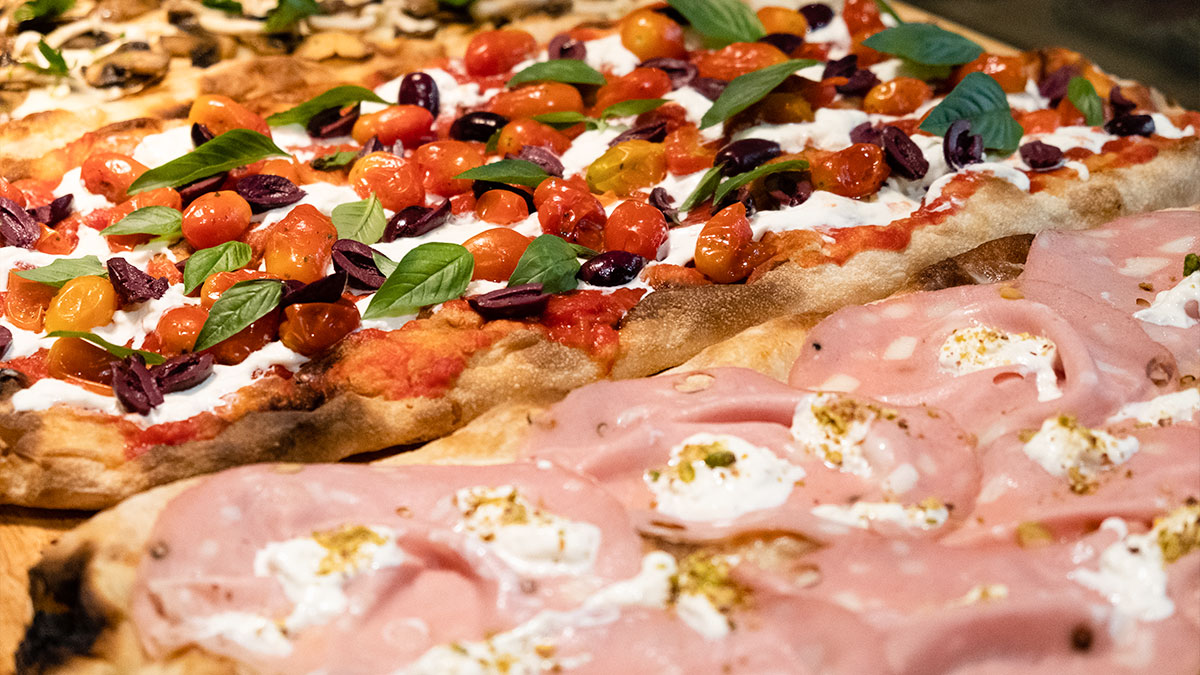
I use a 30x40cm oven tray, ideally I use a blue iron rectangular tray
If you are kneading by hand I recommend 70% water content. If you have a kneading machine, you can probably go up to 80%, which would be better. For each 30x40cm tray, ideally 600g of dough, with this composition:
| Ingredient | g | % |
|---|---|---|
| Flour | 348 | 100 |
| Water | 244 | 70 |
| Salt | 7 | 2 |
| Yeast | 1.4 | 0.4 |
| ---- | ---- | ---- |
| Total | 600 |
- Flour: I recommend this, which can also be found in Hong Kong: https://www.hktvmall.com/hktv/en/main/Foodie-Trading-Limited/s/B0628001/Supermarket/Supermarket/Seasoning/Flour-%26-Pancake-Mix/Nuvola-Soft-Wheat-Flour-Type-0-1-Kg-Parallel-Import/p/B0628001_S_CAP002
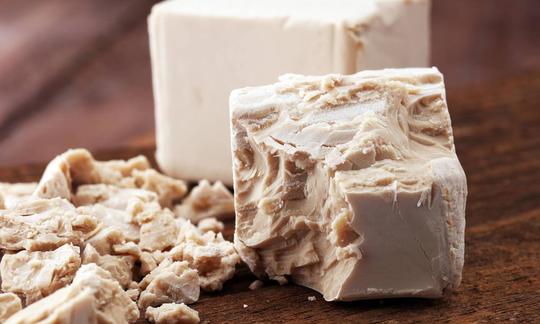
- Yeast: this quantity is for fresh yeast, commonly used in bread baking. See:
- good quality canned peeled tomatoes, for instance
- salt (1% of the weight of the tomatoes)

400g of tomatoes should be enough for at least 2 trays.
Whatever you like, most pizzas contain at least mozzarella cheese and basil leaves, but it's completely up to you.
- Add all the flour, yeast and 2/3 of the water.
- Mix until all water is absorbed.
- Add salt.
- Now for the remaining 1/3 of the water add it in small amounts, while kneading, so that the new water is completely absorbed before adding the next batch.
The end result should be a smooth, elastic and nonsticky dough and should take less than 20 minutes. It could happen that kneading by hand once the dough reaches 70% water content will leave it slightly sticky. That is alright if not excessively sticky. The water should be cold, and the dough should never go above 25C temperature. This is particularly imporant if kneading with a machine, as it will warm it up a lot more than by hand. If that is the case, use ice cold water and check the temperature with a thrermometer.
At the end, the dough can be rested for 1-2 periods of 15 minutes, followed by a few folds to make a ball again. This helps making it smoother and less sticky if needed.
Put the dough in a closed plastic container, and in the fridge for 16 hours. At the end of this time, it should have doubled in volume.
Take it out, make again a few folds and a ball. This should then proof for 8 more hours in a room at 18°C. It will more or less double again in volume.
If you don't have a temperature controlled environment, the goal is to have it double in volume, so the yeast quantity will probably need to be recalculated for your circumstances.
Take the tomatoes, salt, immersion blender until smooth. Done.
Time to cook: put the dough ball (do not crush it or fold it anymore!) with some flour on a table and prepare it for the tray. Best is a short video explanation:
https://www.youtube.com/shorts/hv1MCL96YxI
Spread tomato sauce all over, but no other toppings. The tomato sauce should be a thin layer, not too heavy otherwise it will make the pizza soggy with water.
Cook around 280°C for 8-9 minutes.
Add mozzarella and other toppings that need to be cooked.
Cook at 250C for 4-5 minutes.
Note that for your convenience, these two cooking phases can be done at completely different times. For instance you can prepare all "basic" tomato trays in the morning and then just finish them at dinner time. Or they can even be prepared days in advance and frozen.
And serve!