

For decades, much of software engineering has treated the browser as the last mile—the final delivery surface after databases are designed, APIs are finalized, and infrastructure decisions are locked in. What happens in the browser is often considered cosmetic, downstream, or even optional until late in the process.
That mindset made sense when browsers were weak, networks were slow, and UI logic was brittle. It makes far less sense today.
The modern browser is no longer a thin client. It is a capable, standards-based runtime with native layout engines, state handling, accessibility primitives, rendering pipelines, and security models that rival entire application stacks of the past.
If 99% of users experience software only through the browser, then calling it “the last mile” is backward.
It’s the first mile.
- Define data models
- Build services and APIs
- Implement business logic
- Design infrastructure
- Then design the UI
- Discover UX and integration problems late
This approach optimizes for backend certainty—but defers user reality.
- Model real user interaction first
- Build a working UI using native browser standards
- Let visible behavior define real requirements
- Feed those requirements back into services and infrastructure
- Allow backend teams to choose how they integrate
This approach optimizes for clarity, optionality, and alignment.
Treating the browser as the first mile changes its role:
- Not a rendering target
- Not a template endpoint
- But a living specification
A working UI:
- Exposes missing data early
- Reveals unnecessary endpoints
- Forces accessibility and semantics upfront
- Clarifies performance constraints before scale
- Makes integration tangible, not theoretical
When backend teams see a functioning UI:
- They know exactly what they’re building
- They can reuse it, replace it, or ignore it—with confidence
- Ambiguity disappears
This doesn’t constrain backend engineers. It frees them.
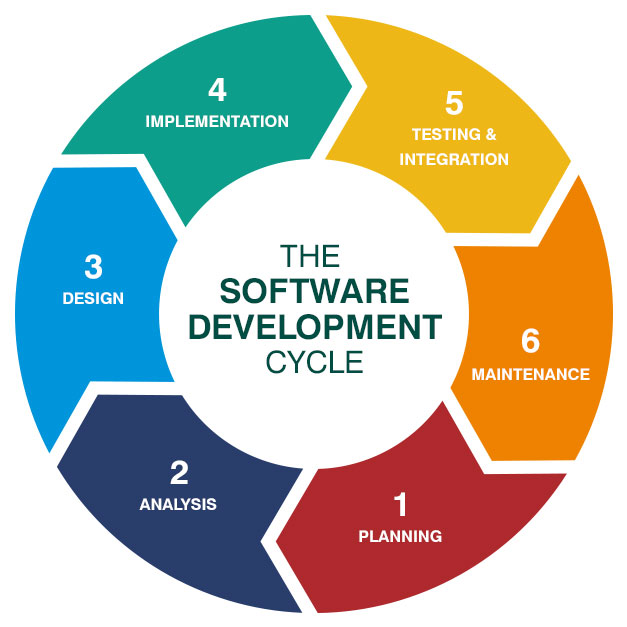
Think of the SDLC not as a pipeline ending in UI, but as a loop that starts with user reality.
Old: Abstract features, tickets, assumptions First Mile: Visible interaction models users can touch
Old: Wireframes disconnected from implementation First Mile: Real HTML, CSS, and native browser behavior
Old: Backend-first APIs guessing future UI needs First Mile: APIs shaped by proven UI requirements
Old: UI tested after system stability First Mile: UI correctness validates system behavior early
Old: UI as a fragile integration layer First Mile: UI as a stable, standards-based contract
Old: UI breaks when systems evolve First Mile: UI evolves independently, safely, visibly
- More options, later
- Fewer irreversible decisions early
- Lower rework cost
- Higher alignment between teams
- Better accessibility and compliance by default
- A shared, living source of truth
Most importantly, it shifts risk left, where it’s cheapest and easiest to address.
The D7460N Architecture exists as a full, concrete expression of this first-mile model.
Its core premise is simple:
- The browser is a standards-based platform, not a liability
- UI is not a byproduct—it is the interface to reality
- HTML defines structure
- CSS defines state and behavior
- JavaScript delivers data—nothing more
By treating the browser as the first mile:
- UI becomes a durable asset, not a disposable layer
- Backend systems gain clearer targets
- The entire SDLC gains flexibility instead of rigidity
This is not anti-backend. It is pro-clarity.
Turning the “last mile” into the first mile doesn’t reject decades of engineering wisdom—it completes it.
It acknowledges a simple truth:
Software does not begin in the database. It begins where humans encounter it.
When we start there, everyone downstream wins.
And the web—built on open standards, shared understanding, and real user experience—finally gets treated as what it has already become:
The most powerful application platform in history.