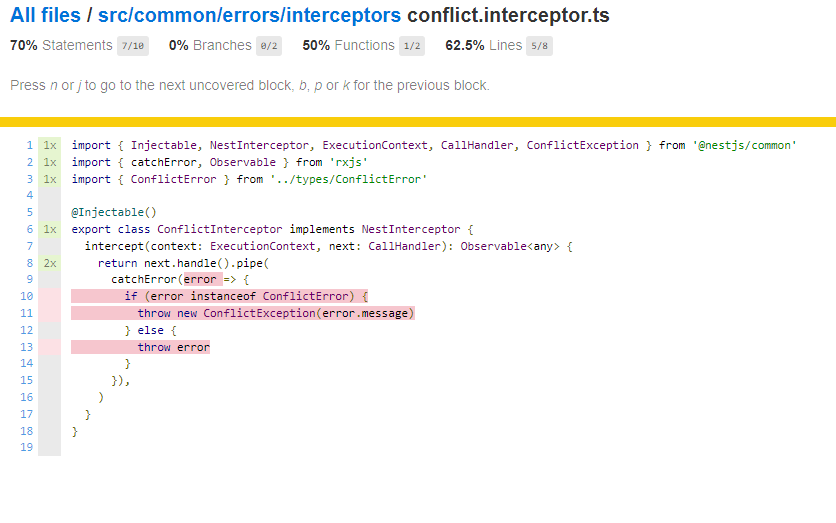
A classe ConflictInterceptor()
import { Injectable, NestInterceptor, ExecutionContext, CallHandler, ConflictException } from '@nestjs/common'
import { catchError, Observable } from 'rxjs'
import { ConflictError } from '../types/ConflictError'

@Injectable()
export class ConflictInterceptor implements NestInterceptor {
  intercept(context: ExecutionContext, next: CallHandler): Observable<any> {
    return next.handle().pipe(
      catchError(error => {
        if (error instanceof ConflictError) {
          throw new ConflictException(error.message)
        } else {
          throw error
        }
      }),
    )
  }
}
O teste:
import {  ExecutionContext } from '@nestjs/common'
import { CallHandler } from '@nestjs/common/interfaces'
import {  lastValueFrom, of } from 'rxjs'
import { ConflictInterceptor } from './conflict.interceptor'
import { createMock } from '@golevelup/ts-jest'
import { ConflictError } from '../types/ConflictError'

describe('ConflictInterceptor', () => {
  let interceptor: ConflictInterceptor

  beforeEach(() => {
    interceptor = new ConflictInterceptor()
  })

  it('should be defined', () => {
    expect(interceptor).toBeDefined()
  })

  describe('intercept', () => {
    it('should return handleConflictErrors', async () => {
      const error = new ConflictError()
      const context = createMock<ExecutionContext>()
      const next = createMock<CallHandler>({
        handle: () => of(error),
      })
      const observable = interceptor.intercept(context, next)

      const errorReturned = await lastValueFrom(observable)
      //const catchErrorReturned = await lastValueFrom(observable.pipe(catchError(err => of(err))))

      expect(error).toEqual(errorReturned)

      expect(errorReturned).toBeInstanceOf(ConflictError)
      expect(next.handle).toHaveBeenCalledTimes(1)
    })

    it('should s', async () => {
      const context = createMock<ExecutionContext>()
      // Arrange
      const error = new ConflictError()

      // This guarantees our data will be returned to our interceptor
      const next = {
        handle() {
          return of(error)
        },
      }

      interceptor.intercept(context, next).subscribe(data => {
        expect(data).toEqual(error)
      })
    })
  })
})
Resultado no cpverage