At the moment, I use VS code to build / debug blender. This video is great to get started on the internals of blender.
VS code task.json:


At the moment, I use VS code to build / debug blender. This video is great to get started on the internals of blender.
VS code task.json:

| // | |
| // Lookup Tables for Transvoxel's Modified Marching Cubes | |
| // | |
| // Unlike the original paper (Marching Cubes: A High Resolution 3D Surface Construction Algorithm), these tables guarantee | |
| // a closed mesh "whose connected components are continuous and free of holes." | |
| // | |
| // Rotations are prioritised over inversions so that 3 of the 6 cases containing ambiguous faces are never added. 3 extra | |
| // cases are added as a post-process, overriding inverses through custom-build rotations to eliminate the rest. | |
| // | |
| // Uses the exact same co-ordinate system as https://gist.github.com/dwilliamson/c041e3454a713e58baf6e4f8e5fffecd |

| // ==UserScript== | |
| // @name ls-twitter-embed | |
| // @namespace https://gist.github.com/cannibalox/e75fe2f2ecc0de08a13025a559e166cd | |
| // @version 0.1 | |
| // @description fetch tweets from url | |
| // @author ported to logseq from louis kirsch's dynalist userscript | |
| // @match https://logseq.com/* | |
| // @grant GM.xmlHttpRequest | |
| // @run-at document-end | |
| // @require http://code.jquery.com/jquery-3.4.1.min.js |


Check it on ArtStation : Quaternion Julia.
Quaternion Julia is a type of 3D fractals created using 4D vectors called quaternions. These 4D vectors have a complex structure with one real value and three imaginary values. For more info about it, check this nice article from Paul Bourke.
For the project setup, I used the same one as in the Mandelbox with VEX project but with different code in the VolumeWrangler.
The main idea here is to use quaternions to change each voxel's position during the iterations. We will use a for loop to compute the terms of the
| Copyright (c) 2020- Juha Järvi | |
| Permission to use, copy, modify, and/or distribute this software for any | |
| purpose with or without fee is hereby granted. | |
| THE SOFTWARE IS PROVIDED "AS IS" AND THE AUTHOR DISCLAIMS ALL WARRANTIES WITH | |
| REGARD TO THIS SOFTWARE INCLUDING ALL IMPLIED WARRANTIES OF MERCHANTABILITY | |
| AND FITNESS. IN NO EVENT SHALL THE AUTHOR BE LIABLE FOR ANY SPECIAL, DIRECT, | |
| INDIRECT, OR CONSEQUENTIAL DAMAGES OR ANY DAMAGES WHATSOEVER RESULTING FROM | |
| LOSS OF USE, DATA OR PROFITS, WHETHER IN AN ACTION OF CONTRACT, NEGLIGENCE OR |

It is exciting to see so many new color features for the CSS Color Module. There are nevertheless a couple items that resulted in a "raised eyebrow response". This Gist is mainly going to focus on one: the use of the LAB version of LCh instead of LUV LCh, which may be better suited for the task but appears to have been dismissed as if irrellevant.
I DISAGREE. Luv is in common use and very relevant, and LuvLCh or one of the several LuvLCh variants has distinct advantages over LabLCh for use cases such as choosing color for web content for displays.

| import json | |
| import glob | |
| all_bookmarks = [] | |
| md_file = open("bookmarks.md", "w+") # saving in markdown file, if no file exists using '+' creates one | |
| files = [file for file in glob.glob("JSONBookmarks/*")] # using glob to read all files from the folder | |
| for file_name in files: | |
| print(file_name) | |
| with open(file_name) as bk: |

In PIX, Select Target Process => Launch Win32 and set the following 2 entries according to where Canary / Chrome is installed:
Then click on "Launch".
Important: you should close all your Canary / Chrome windows/processes before clicking on the "Launch" button!

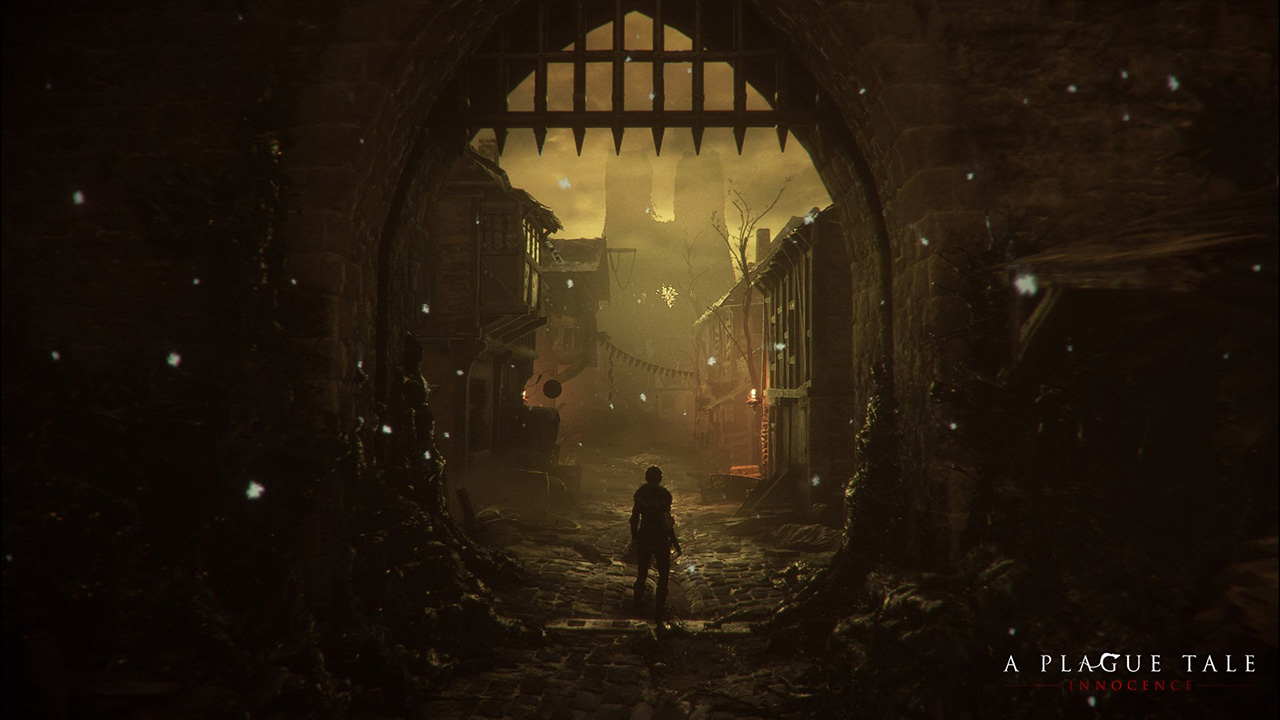
WARNING: Article moved to separate repo to allow users contributions: https://github.com/raysan5/custom_game_engines
A couple of weeks ago I played (and finished) A Plague Tale, a game by Asobo Studio. I was really captivated by the game, not only by the beautiful graphics but also by the story and the locations in the game. I decided to investigate a bit about the game tech and I was surprised to see it was developed with a custom engine by a relatively small studio. I know there are some companies using custom engines but it's very difficult to find a detailed market study with that kind of information curated and updated. So this article.
Nowadays lots of companies choose engines like [Unreal](https:

A. Schneider, "Real-Time Volumetric Cloudscapes," in GPU Pro 7: Advanced Rendering Techniques, 2016, pp. 97-127. (Follow up presentations here, and here.)
S. Hillaire, "Physically Based Sky, Atmosphere and Cloud Rendering in Frostbite" in Physically Based Shading in Theory and Practice course, SIGGRAPH 2016. [video] [course notes] [scatter integral shadertoy]
[R. Högfeldt, "Convincing Cloud Rendering – An Implementation of Real-Time Dynamic Volumetric Clouds in Frostbite"](https://odr.chalmers.se/hand

